Pro Tools
Pro Tools Music Production Course | London
London is where Garnish began, and the Pro Tools here is taught by producers working in the city's studios, clubs and labels. Groups are small, classes are hands-on, and the same course runs live online for students elsewhere in the UK and Europe, using our specialist music collaboration software, Muse.
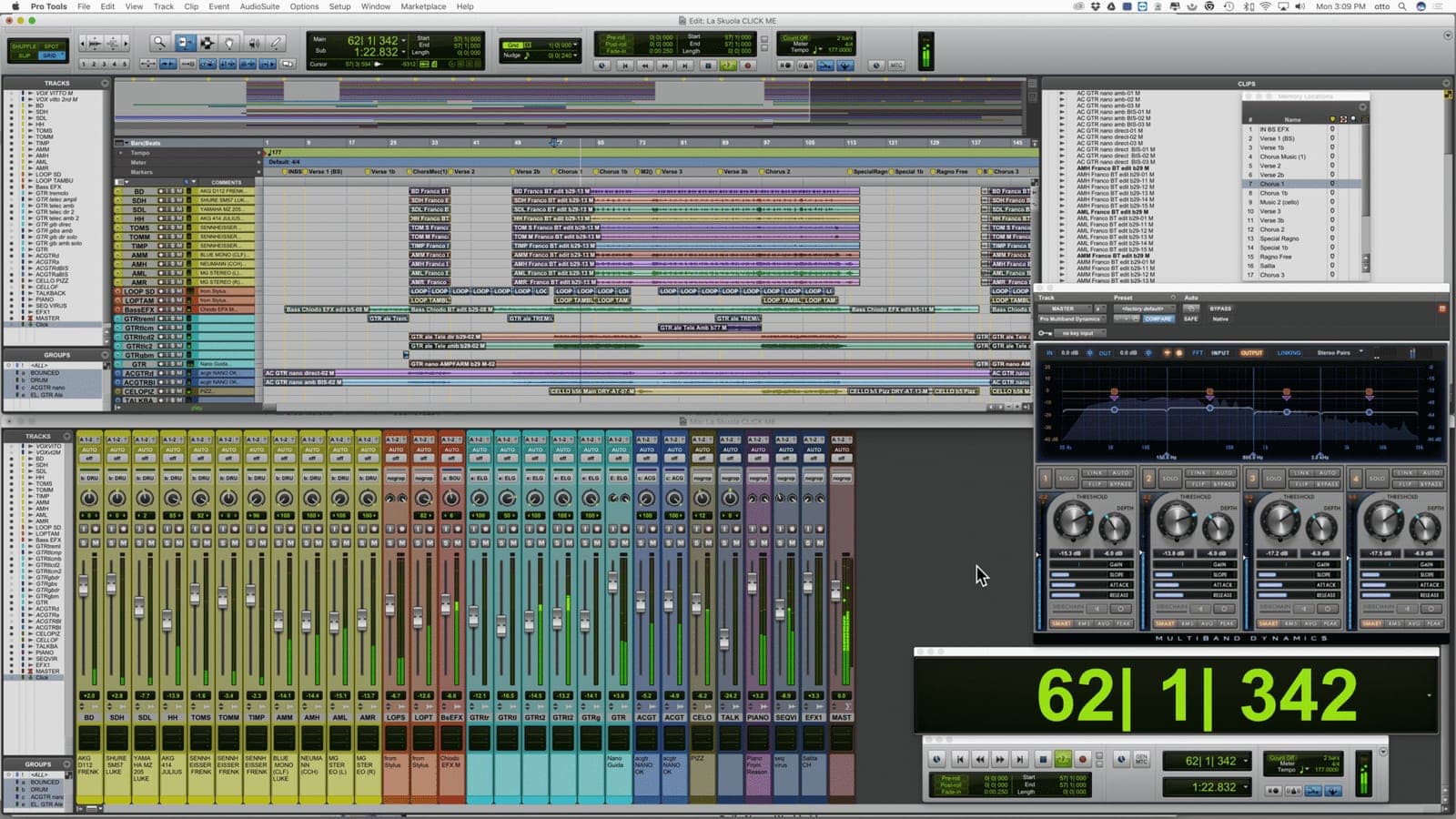
- →Edit & mix window introductions
- →Software installation, toolkits, iLoks & licenses
- →Avid hardware and other compatible interfaces
- →Launching Pro Tools & session start up
- →File format, bit depth, & sampling rate tips
- →Pro Tools file structure and file management
- →Importing audio, creating and track arranging tips
- →Edit modes - all about Slip, Spot, Shuffle & Grid
- →Multi-tool (Trimmer, Grabber, Selector)
- →Transport window - tempo, pre & post roll count off
- →Grid and nudge values
- →Edit window orientation
- →Recording techniques, punching in & out
- →Creating click tracks, playlists and loop recording
- →Auxiliary tracks, effect sends & foldback mixes
- →Memory locations and markers
- →Grouping tracks, solo modes, pre or post fader
- →Pro Tools and interface I/O - microphones and instruments
- →Strip silence and tab to transient and consolidating clips
- →Repeating and duplicating clips
- →MONO, stereo, and panning
- →Overview and automation for plugins and effects
- →Clip based gain and automation
- →Pencil tool, TCE (Time Compression Expansion Tool)
- →Master Fader, VU and peak meters
- →Beat Detective - time correct live drums
- →Exporting audio, bouncing mixes and dithering
- →Creating drum loops in Pro Tools
- →MIDI controllers and editing MIDI
- →Printing software Instruments
- →0dbfs and digital clipping
- →Preparing your session for mix-down
- →Consolidating audio and cleaning up your session
- →Exporting MP3s and Editing METADATA [mkd_icon icon_pack="font_awesome" fa_icon="fa-solid fa-arrow-right" size="mkd-icon-tiny" custom_size="" type="normal" border_radius="" shape_size="" icon_color="#ce1713" border_color="" border_width="" background_color="" hover_icon_color="" hover_border_color="" hover_background_color="" margin="" icon_animation="" icon_animation_delay="" link="" anchor_icon="" target="_self"] Mixing techniques for post production, including film & TV
- →Key command shortcuts’ review
In our students' words.
“A nice relaxed working environment and detailed, in-depth working practices. I really got a lot from this course and answered a lot of questions I had about sound engineering processes in Pro Tools.”
Paul Tilley
Instructors
Ready when you are.
InquireRecording and Mixing Vocals
Comping, tone control, mic modelling, de-popping, pitch correction, compression, reverb and delay - the full vocal chain, start to finish.
Read →Audio Mixing Course | Music Mixing Courses | GARNISH
Anyone who does an audio mixing course should experience life 'out of the box'. Not only is it fun to have a play on a load of real analogue kit, we believe that your mixes in the box will benefit from this experience. Victor balancing up a backing track on the Neve. It is a different art and most o
Read →Filtering
There are many ways to access the power of filtering, but probably the easiest is to use a plug-in. Logic’s AutoFilter is a good example of Emagic’s…
Read →Acoustics: The Basics
Why room shape changes what you hear, what standing waves do to your low end, and what RT60 means for a small studio.
Read →More Creative Mixing Techniques
Reverse effects, distortion, miced amps and the practical side of sample clearance - what it costs and how to avoid needing it.
Read →Mixing Desk Basics
Now we have an environment that isn’t coloring what we hear we can start to look at how we can improve the mix itself.
Read →