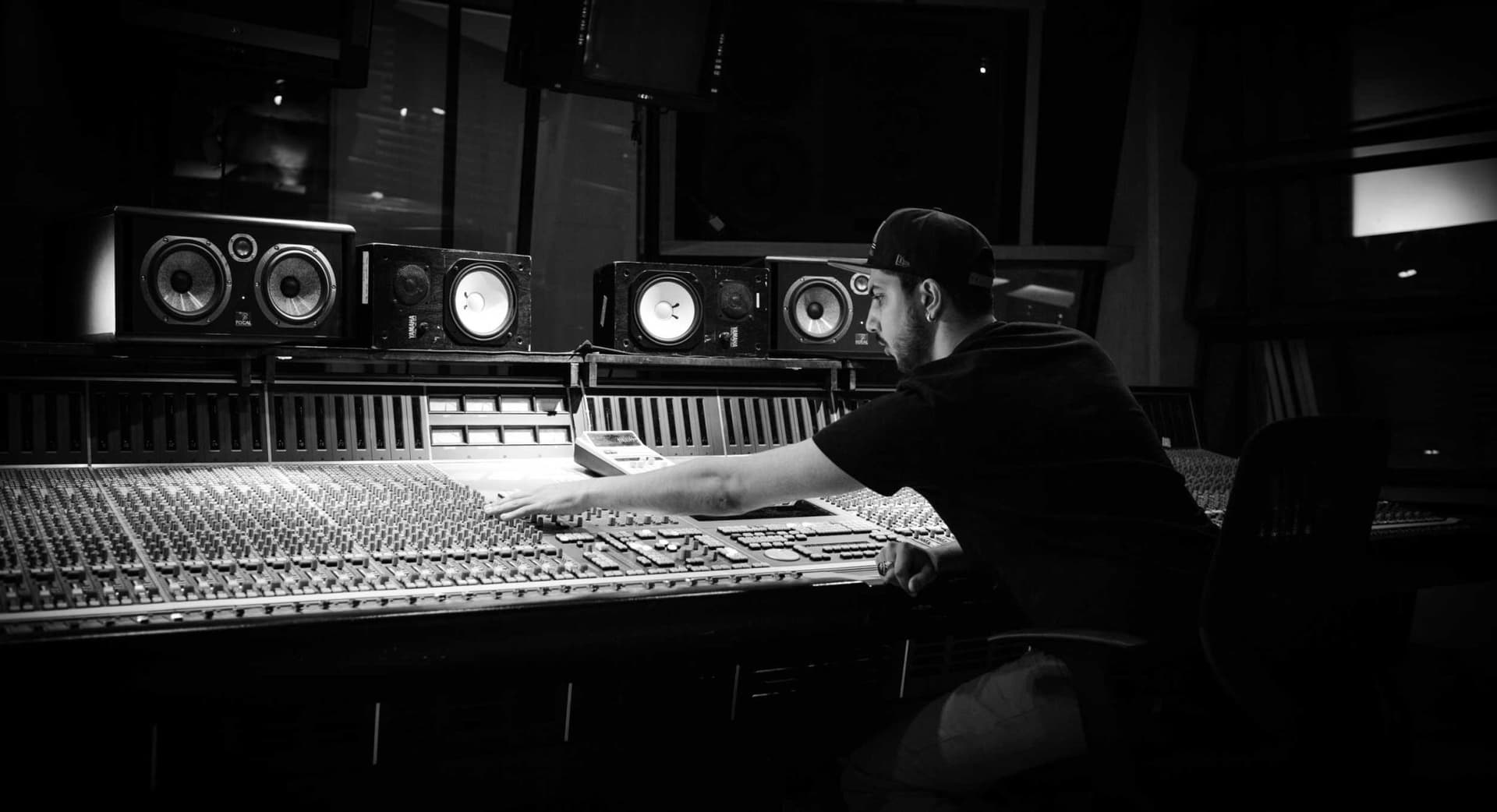
Mixing & Mastering Course | London
In our students' words.
“As a songwriter/producer I relied heavily on engineers for recording and mixing if I wanted to get my tracks sounding like masters. I always wanted to do more myself but struggled to learn anything watching an engineer zip around Logic or Pro Tools at 1000 mph! Then I found Garnish School of Sound and did their Mixing and Mastering course. It was exactly what I needed, we covered everything I was unsure of in the past from using buses properly, EQ, audio compression and using specialist mastering plugins. Everything was explained and demonstrated in a way I understood. I never thought i'd ever be able get such great sounding tracks doing everything myself.”
Ben Cullum
Instructors
Program modules.
- →EQ
- →Studio monitor speaker design
- →The art of balancing and panning
- →Acoustics and acoustically treating your home studio
- →All about mono, stereo and 5.1 in your software DAW
- →Dynamics controller tips to achieve clarity in your mix
- →All about compression
- →In-depth with the parameters
- →Types of compression circuitry (optical, valve etc) and their digital emulations
- →Parallel dynamic processing
- →Gates and de-essers
- →Tips on how to make your records come to life with FX
- →Types of reverb and delay, where to use them
- →In-depth with all the parameters
- →Spatialisation with convolution reverbs and delays
- →Phaser, flanger, chorus, pitch shifters, harmonisers and creative FX
- →Getting separation between lead and BVs
- →Tips on automating levels (rides)
- →FX Chains for your vocal sound
- →Preparing vocals, vocal comping and tuning vocals
- →Saturation
- →Filtering and samples
- →Vocoder, Ring Modulators, Envelopers, Auto-panning, distortion and bit crushing
- →Sidechaining dynamic controllers and filters for FX
- →Getting creative with reverb and delay
- →Pitch shifters, harmonisers and creative FX
- →Active listening and critiquing of released mixes
- →Analysis and critique of your mixes
- →EQ, brick wall limiting, levels, and phase
- →Which mastering plugins to use – dos and don’ts
- →Other useful metering tools
- →Using references to get your EQ and separation. A/Bing
- →Use your own laptop, or use our iMacs free of charge.
- →Headphones, controllers and Ableton Push are available to use.
- →50% FabFilter discount available for all Garnish students.
Ready when you are.
InquireMixing: The Short Version
The whole mixing process, condensed: zeroing the desk, subgrouping, panning, using your ears, and where ambience fits in.
Read →The Vocoder
A Vocoder – name derived from voice coder, formerly also called Voder – is a speech analyser and synthesizer.
Read →Equalization
Equalization is the process by which an equalizer is used to either boost or cut different frequencies in an audio signal in order to change its tonal…
Read →Mixing Desk Basics
Subgrouping a mix, using reference tracks properly, and keeping your monitoring level honest over a long session.
Read →How to EQ Vocals
How to EQ Vocals Katie Gilchrest's guidelines on how to EQ vocals. For most styles of music, vocals are one of the most important parts of the mix. Poorly EQd vocals can cause detriment and distraction to an otherwise great song. Equalization using a parametric EQ is a tool that can allow vocals to
Read →Filtering
How filters shape a sound - low-pass, band-pass, comb and notch - plus resonance, envelope control and using filters creatively in a mix.
Read →