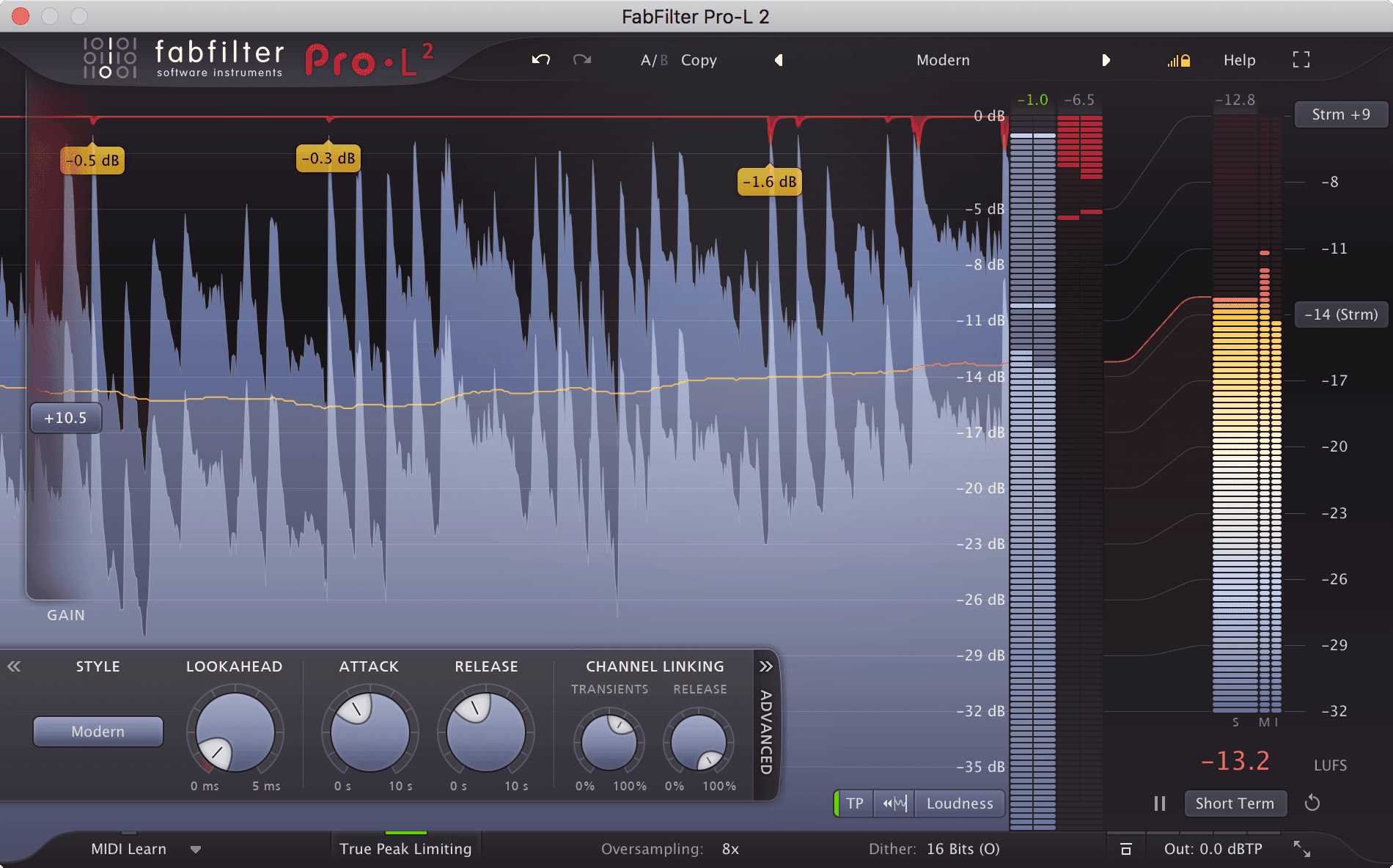
Audio Mastering Course
Daily News, Worldwide
- →Paperli.PaperWidget.Show({pid: 'a107aa11-167a-48e6-b5ed-af5cc5647461', width: '100%', background: '#CE1713'})
In our students' words.
“As a songwriter/producer I relied heavily on engineers for recording and mixing if I wanted to get my tracks sounding like masters. I always wanted to do more myself but struggled to learn anything watching an engineer zip around Logic or Pro Tools at 1000 mph! Then I found Garnish School of Sound and did their Mixing and Mastering course. It was exactly what I needed, we covered everything I was unsure of in the past from using buses properly, EQ, audio compression and using specialist mastering plugins. Everything was explained and demonstrated in a way I understood. I never thought i'd ever be able get such great sounding tracks doing everything myself.”
Ben Cullum
What you'll cover.
Daily News, Worldwide
- →Paperli.PaperWidget.Show({pid: 'a107aa11-167a-48e6-b5ed-af5cc5647461', width: '100%', background: '#CE1713'})
Instructors


Ready when you are.
InquireSetting Up a Mastering Session
A practical mastering session template - the premaster track, a dedicated processing chain, reference playback, metering at the end of the chain, gain matching, printing and versioning - and the checks that nothing is degrading the audio.
Read →Building a Mastering Chain
Putting mastering processors in a sensible order - repair, corrective EQ, dynamics, colour, tonal and stereo shaping, and limiting last - why order matters, and why the best chain is usually short.
Read →Preparing a Premaster
How to hand over a mix that masters well - headroom and level, what to do with master-bus processing, file format, fades and edits, multiple versions, and the checks to run before you export.
Read →Portability: Masters That Translate
Making a master work everywhere people listen - phones, earbuds, cars, laptops, smart speakers and clubs - with mono compatibility, low-end translation, codec checks, and a translation checklist.
Read →Make This: Master and Release an EP
The Mastering and Release project - master four tracks to a consistent standard, prepare every deliverable, build the metadata, artwork and clearances, and plan the full release campaign.
Read →Balance: EQ and Mid/Side in Mastering
Tonal and stereo balance in mastering - subtle, broad EQ moves, linear-phase and minimum-phase EQ, dynamic EQ, comparing with references, what mid/side is, and mid/side EQ and compression in practice.
Read →