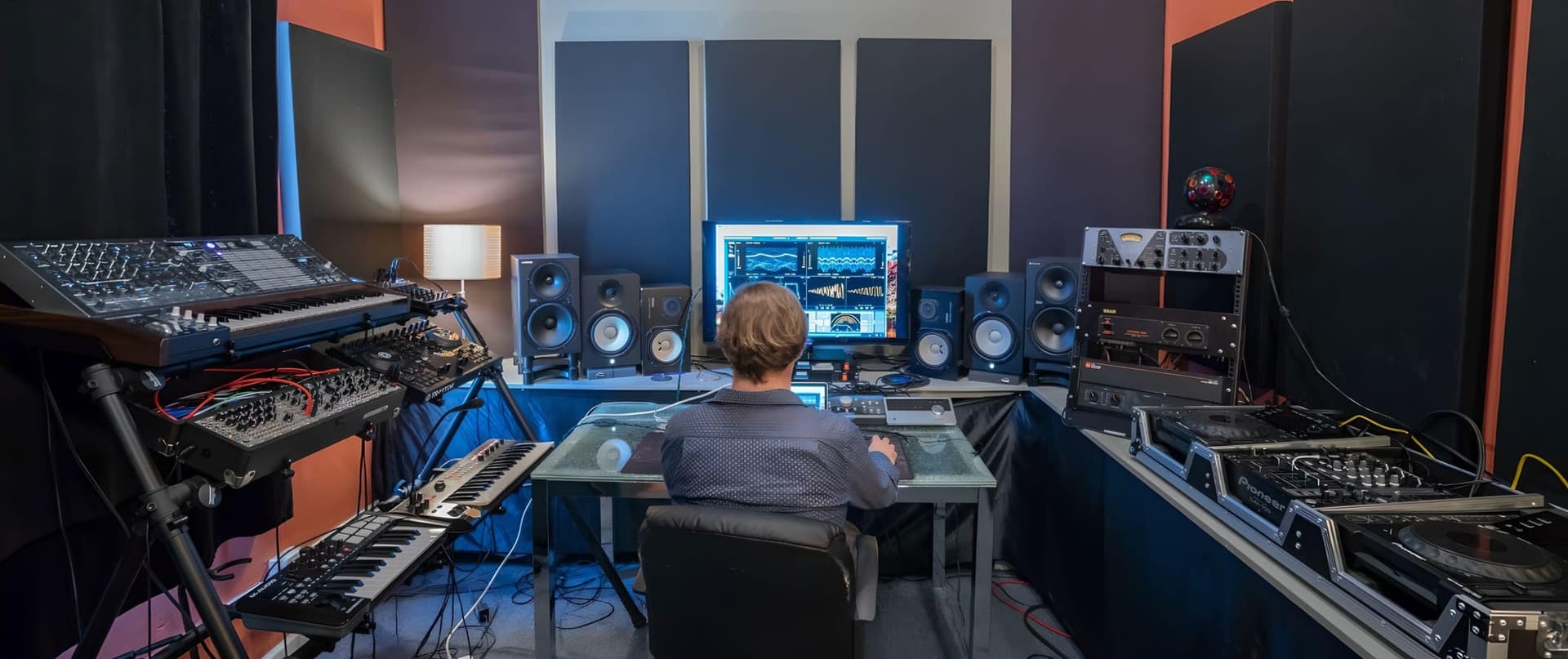
BA (Hons) Pathway | Electronic Music Production
Pathway to Earn a Prestigious UK BA (Hons) Degree
Complete all academic learning online with our expert module leads. Then, tap into your local Garnish student hub for everything else — collaborate in person, connect with like-minded peers, get help on your modules from our in-house team, and be part of our global creative community. You’ll be working towards your qualification, delivered in English and recognized worldwide. For your final year, choose from our network of university partners to complete your BA (Hons) degree in person or online.
London is where Garnish began, and the BA (Hons) Pathway here is taught by producers working in the city's studios, clubs and labels. Groups are small, classes are hands-on, and the same course runs live online for students elsewhere in the UK and Europe, using our specialist music collaboration software, Muse.
Part 1
Level 4 Extended Diploma in Electronic Music Production (120 credits) provides a comprehensive foundation in sound design, synthesis, mixing, and professional development. Learners develop technical proficiency in DAWs, MIDI sequencing, and sampling while refining their creative identity through critical self-reflection. They explore electronic music history, analyzing influential styles and techniques to inform their work. The program includes hands-on industry projects, guiding learners in executing professional-quality productions. Business and branding strategies are covered, helping them monetize their skills. The course culminates in a professional showcase, equipping learners with the tools to succeed in electronic music production, performance, and entrepreneurship.
→ There are several pathways available, with a choice of validating universities, depending on your specific skills, needs and goals.
→ Apply to study at a University in the UK for a year to complete the BA top-up. Tuition fees may be higher, and you will need to apply for a student visa. Discover qualities that distinguish us, here.
In our students' words.
“My time at Garnish London's year long Electronic Music Production course has been invaluable. Being able to learn from industry professionals who are at the top of their game just goes to show what is possible. It has made such a big difference to my musical journey learning production, first hand in a small focused environment with other musicians, instead of trying to learn it all online by myself. This course has covered all of the fundamentals of music production in a comprehensive, practical and hands-on way, and I really couldn't have asked for a better experience. It also helps that the teachers have been patient, enthusiastic and friendly. Thanks for the experience and I can't wait to see what the future holds for me.”
Lorin Pearce
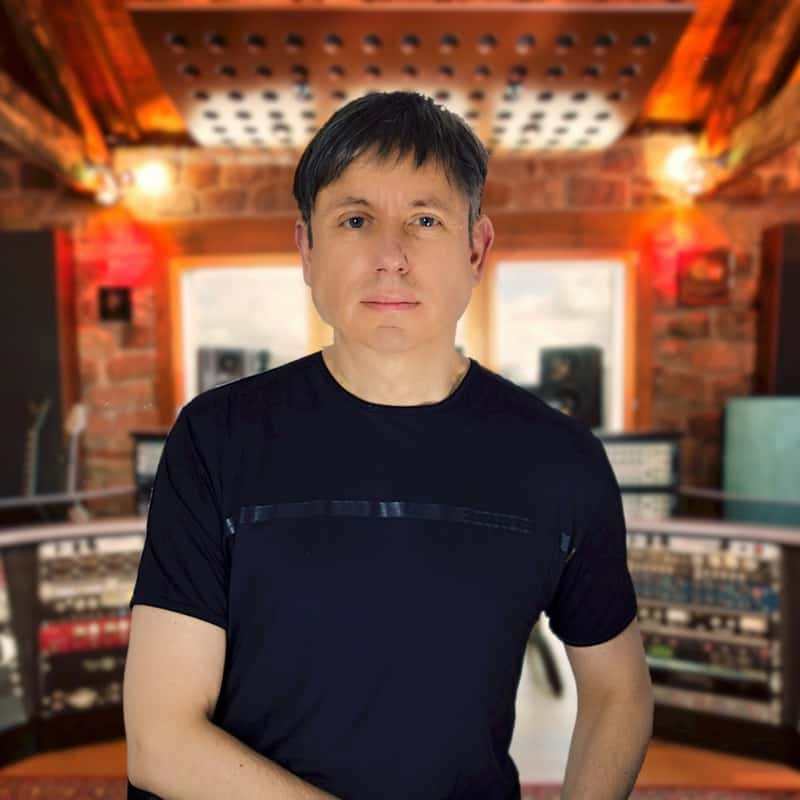
Instructors



Ready when you are.
InquireWhere MIDI Timing Error Comes From
Why MIDI is never perfectly tight, which parts of the chain Live controls and which it does not, and what to do about the ones it does.
Read →Sampler: Create the ultimate drum rack
The Sample Select feature in Ableton Live can be used to select from multiple loaded samples that are mapped across the keyboard and you can then macro…
Read →Comping: Take Lanes
Record the part ten times, then build the best version out of all of them. Take lanes, comping, and the shortcuts that make it fast.
Read →Working with Video
Live will import video, show it while you work, and export it with your audio. Enough to score a short film, cut a trailer, or sync a set to visuals.
Read →What Live Does and Does Not Change
Ableton publishes exactly which operations in Live are bit-transparent and which alter the audio. Some of it is surprising, and all of it is worth knowing before you argue about it online.
Read →Sampler: AUX Env and LFOs
AUX Env and LFOs are powerful modulation tools available in Ableton’s Sampler. They allow you to shape and modulate the sound of your samples in various…
Read →