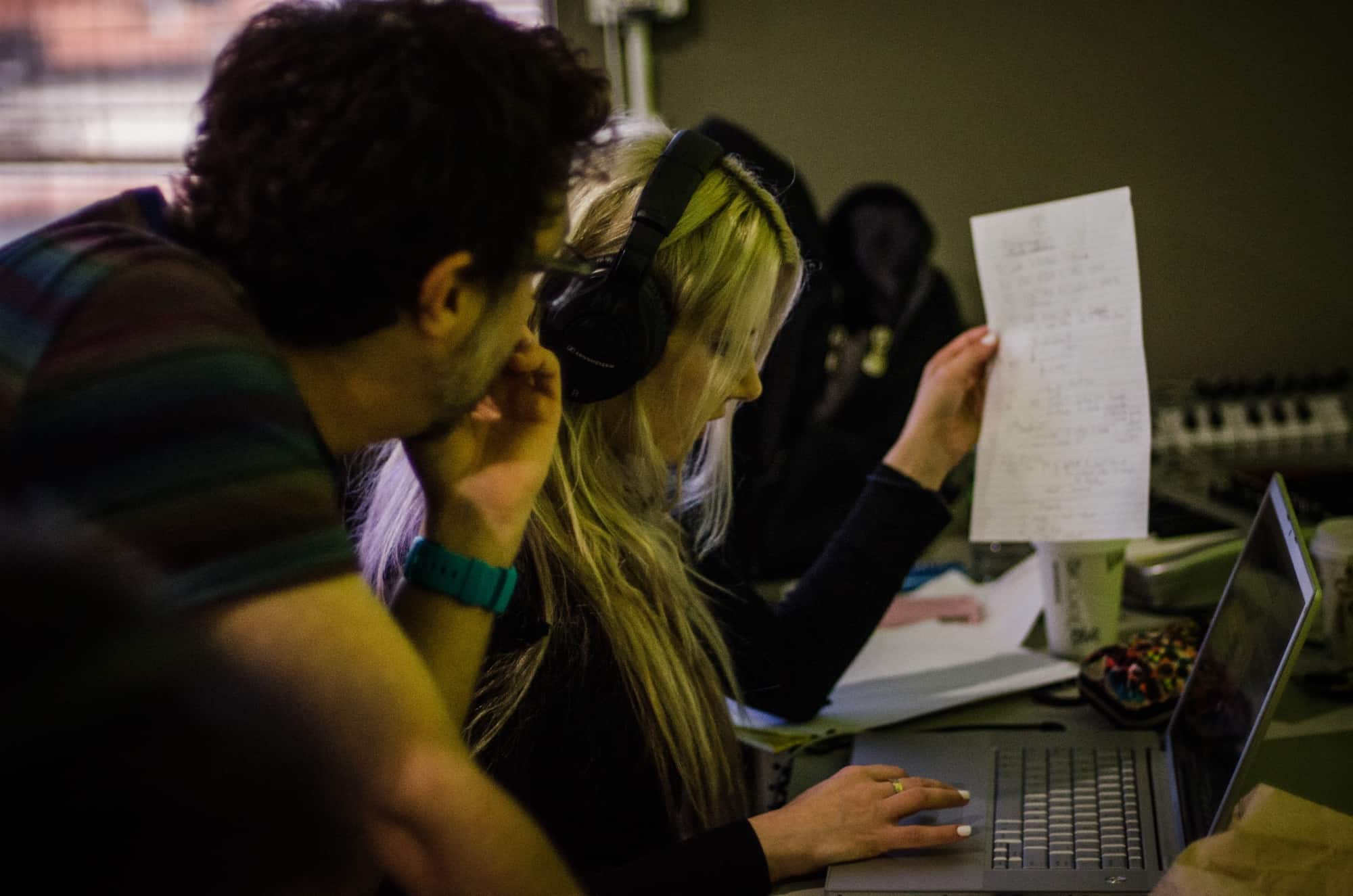
Songwriting & Production Industry Diploma
In our students' words.
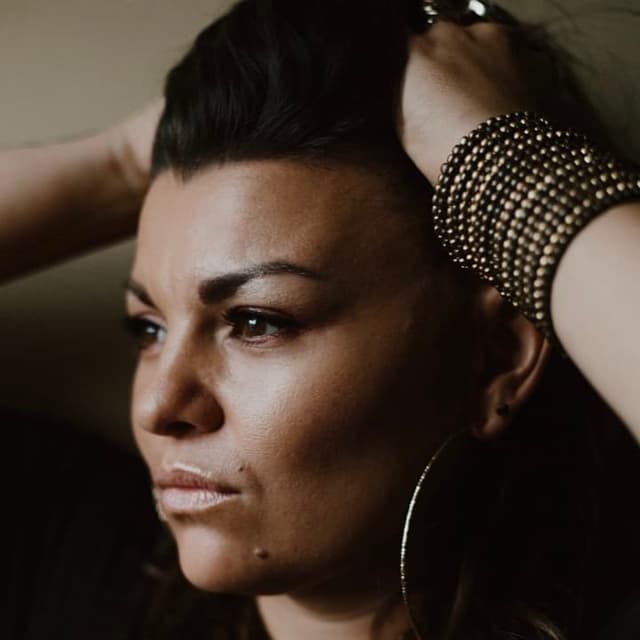
“Being from a songwriting and artist background, I was keen to learn the production side. The instructors were amazing, and I felt they explained things in a language I could understand. Now I am zipping around it almost as comfortably as I am when writing a song!”
Natasha Bedingfield
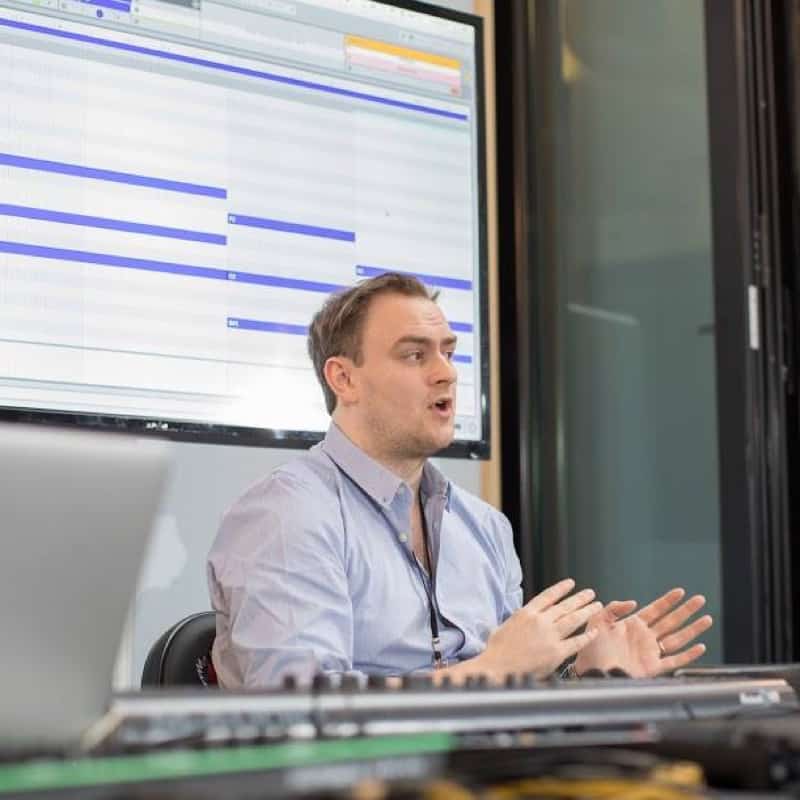
Instructors
Program modules.
By the end of this module, you'll be zipping around Logic Pro like a... pro! You'll get to grips with advanced features like Flexpitch, MIDI FX, chopping up loops and making them your own in the EXS24, alongside learning all about all the fabulous built-in sounds and FX now included in this fully comprehensive digital audio workstation. Many contemporary producers prefer Logic for the 'sound', and you can use both Ableton and Logic together so you get the best of both worlds. Master Diploma learners can opt to take the official Apple exam and become certified in Logic Pro.
Full of contemporary record production tips and techniques and knowledge you need to put together your own commercial (pop, rock, urban, singer/songwriter and commercial dance) backing track fit for A&R meetings and production music houses. From programming bass-lines, strings, basic synthesis, sculpting organic sounds, vocal & song arranging, getting the right sounds, and putting it all together to make your track sound as one and ready for a master mix.
Have you ever wondered why the songs that you write are okay but don’t sound like hits? Have you read songwriting books and watched tutorials on Youtube without them actually making any difference? This top-line songwriting module tells you what other sources either don’t know or don’t want to give away-the concepts shared here are designed to finally bring the hit songwriter out in you!
Ableton Live's session view makes it revolutionary music production software. Top-line songwriters can audition all combinations of music they've composed on-the-fly, making writing melodies fun, creative and more productive. This is why we start you off on Ableton. We are an official Ableton certified training center, and all GMP learners qualify for a 40% discount.
In our Sound Engineering module you will master the art of recording common instruments including guitar, bass, piano and synths. Yes, there is an art to recording synths! The vocal production section is not particularly aimed at singers, but at songwriters and producers. Because even if we don’t sing ourselves, we still need to be able to encourage, coach and produce artists and session vocalists. The more we know about singing, vocal production and recording vocals, the better the main part of our song-the lead vocal-is going to sound! Of course even though we cover vocal technique, actual singing in class is not mandatory, it is ok to just listen!
First, we step out of what you would learn as a professional engineer by covering acoustics and how to set up your home studio environment correctly. Then it’s on to the fun stuff: in-depth EQ, filling the frequency spectrum, dynamic controllers, mixing vocals, how to make just a few elements sound huge, and making all your parts sound as one exploring all the new amazing plugins in the latest Native Instruments Komplete bundle. As you learn these mixing techniques, you will be shown how they apply within electronic music.
Many pro music producers do not get past subtractive synthesis in their entire career, but you will cover subtractive, wavetable, granular, additive and frequency modulated synthesis all using Logic Pro's built in arsenal of synths. They'll also be sampling, resampling, glitch, and more advanced beat-making techniques in this section as you develop your sound.
Introduction-the music business yesterday, today, and the future, rights & societies, lawyers & managers, record companies and publishers. Synchronisation & licensing, D.I.Y. Tools, selling your music, how to get noticed and knocking on doors.
This module explores the roles of the music producer and brings together the many individual components, skills and concepts from all of the stages, from pre-production to completion and delivery of the final version. We focus on concepts such as creating emotion through sound and performance, visualising and defining the direction of the production and achieving your production goal. By understanding the essential concepts of music production, the arrangement of both musical notes and the ‘sonic field’. You learn how to make your band or solo artist (this could be yourself) both unique and compelling to get the very best out of your act.
We take you to a fully commercial recording studio in London, and The Briggs Warehouse, where you will get to play and program in a room full of old analogue synths and toys to find some real analogue sounds for your tracks. Recent artists in our old studio include Soul Clap, Robert Owens and Rui da Silva.
All Academy learners at Garnish will gain a free unlimited membership for our shorter courses, worldwide. This means you can take as many 36-hour courses at any of our participating locations (London, Miami, New York, Los Angeles and San Francisco) free of charge, with no cap on volume or time! Our offer is valid as long as there is availability at your chosen participating school.
Before you enrol.
Complete beginners as much as self-taught producers. It starts by getting you fluent in your production software and takes you through everything a producer needs, at a pace kept to the class.
Kept small for focused learning, start to finish.
Yes - online remote attendance runs alongside the in-person sessions, at its own rate stated on this page.
Ableton, Native Instruments and Apple, whose software and certifications it is built around.
The tuition for this campus, in person and online, is stated on this page just above the call to action.
360 or more hours, across six months of two ten-week terms, with your own project running through it.
Ready when you are.
InquireChords and Progressions
Building triads, deriving the seven diatonic chords of a key, Roman numerals, the common progressions behind thousands of songs, and the emotional character of different chord moves.
Read →Songwriting: How to Write Better Lyrics
by Chris Porter Communicate, connect and feedback. This is critical. A great (or at least, better!) lyric has something to say and knows how to say it. The subject matter is irrelevant if you get this critical step right. Run your ideas past trusted ears. If you’re getting a lot of blank looks, it’s
Read →How to Write a Song With Good Lyrics | Writing a Song
Which comes first, the lyrics or the music? Writing a song is easy but writing a great song isn't. Have you ever wondered how to write a song with good lyrics and a good melody? I've been lucky enough to work with some of the most successful songwriters in the world including Cathy Dennis, Wayne Hec
Read →5 Useful Tips on How to Write Beautiful Song Melodies
Melodies make an integral part of music composition. They are one of the prime reasons why some songs etch in our hearts forever and ever. However, arranging the notes to make a meaningful tune is not a very easy job for many.
Read →Creative Uses for Melodyne
Celemony's Melodyne is a highly sophisticated pitch analysis and correction software suite known mainly for its use in tuning vocals. As effective as it is in this capacity, Melodyne's capabilities allow for a range of other creative uses outside of simply correcting mistakes in performance. In this
Read →Music theory practice, chord progressions, keys and scales
A music production college once asked me to teach music theory and composition - chord progressions, keys and scales, from the ground up.
Read →